High-energy observatories studying the multi-messenger sky

High-energy astrophysics · Paris-Saclay

One universe. Many messengers.

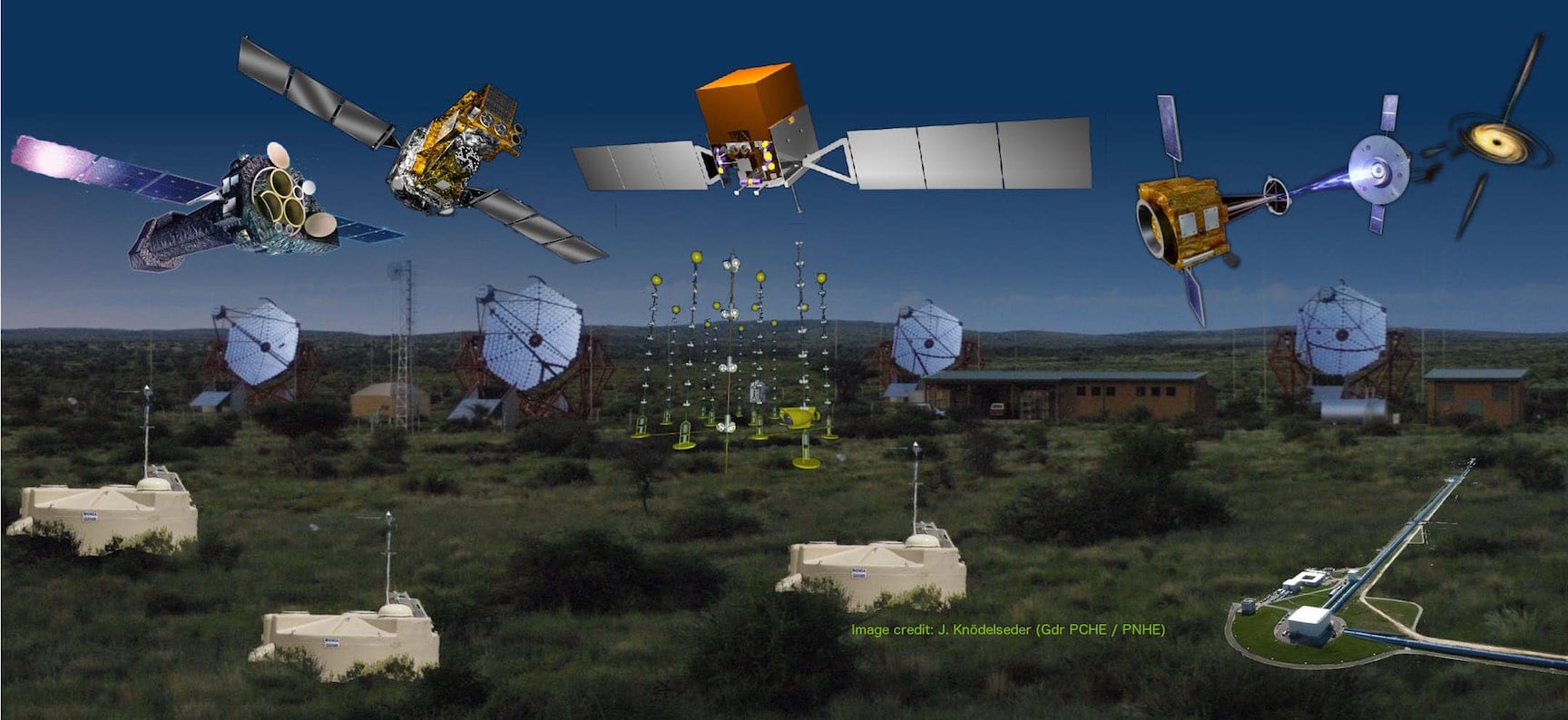
Gamma rays, cosmic rays, neutrinos and gravitational waves reveal the most violent phenomena in nature. We bring these signals together to understand their cosmic origins.

Research focusTransient and multi-messenger phenomena at the highest energies

Astro-COLIBRI

Recent alerts from the transient sky.

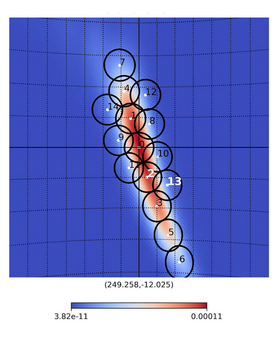
Astro-COLIBRI, developed in our group, collects alerts from gamma-ray, neutrino, gravitational-wave, X-ray, optical and radio observatories and puts them in context in real time, for professional and amateur astronomers.

  1. Burst4FGL J0522.9-3628Fermi ·
  2. Burst4FGL J0521.2+1637Fermi ·
  3. Burst4FGL J0513.9-3746Fermi ·
  4. StarLSPM J2134+2836Einstein Probe ·
  5. BurstEP261023aEinstein Probe ·
  6. Optical transientAT 2026agplMASTER ·

The bigger picture

One sky.
Many signals.

Combining information carried by particles, light and ripples in spacetime gives us a more complete view of the energetic universe.

Multi-messenger astroparticle physics

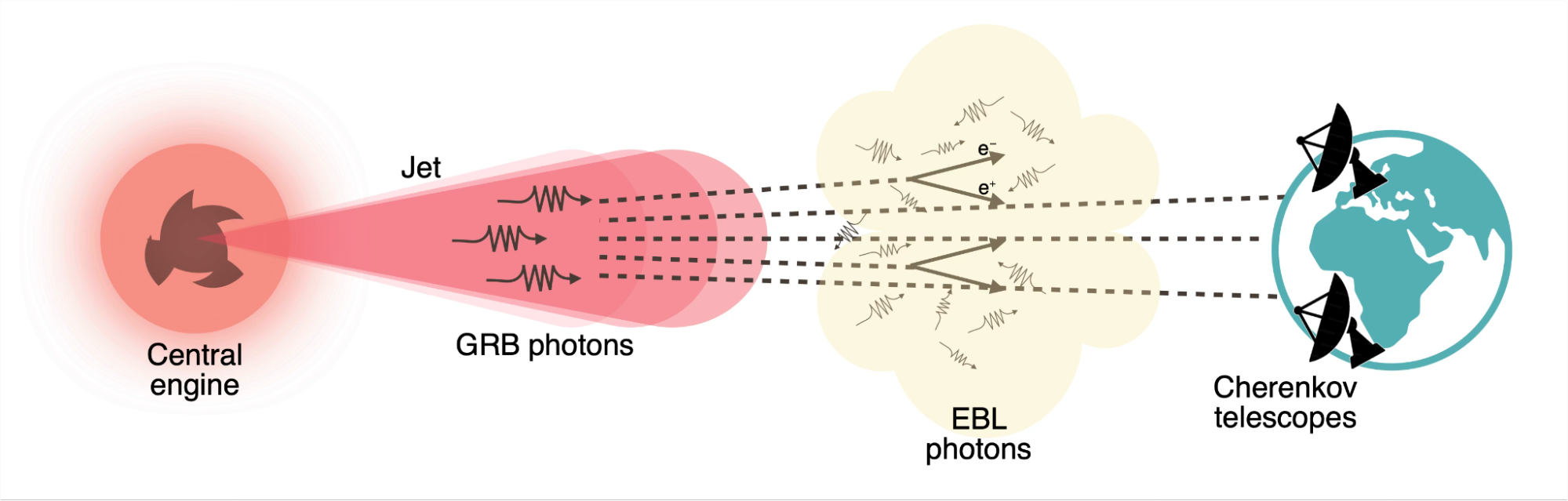
High-energy astrophysics is the domain of the most violent and cataclysmic phenomena in the Universe. It covers a large variety of objects at different scales: Galactic sources of high-energy radiation like pulsars and their nebulae, expanding remnants of supernova and binary systems like microquasars. Many extragalactic galaxies are hosting a massive black hole in their center and mass accretion and ejection lead to violent outbursts of these active galactic nuclei.
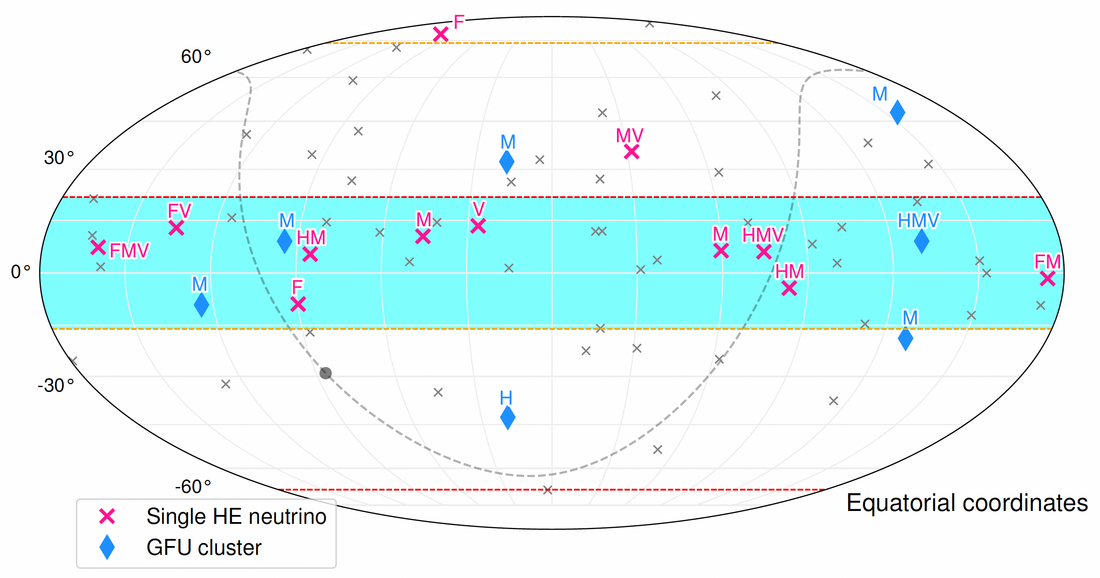
I am studying these phenomena using information provided by various messengers: electromagnetic radiation (also known as light) up to the highest energies, cosmic rays, neutrinos and gravitational waves. I firmly believe that the combination of these observations has the power to elucidate some of the most persistent mysteries in nature…  

Read more about my research
Research themes

Across the
messenger spectrum.

See all research

Field notes

Latest news.

All articles
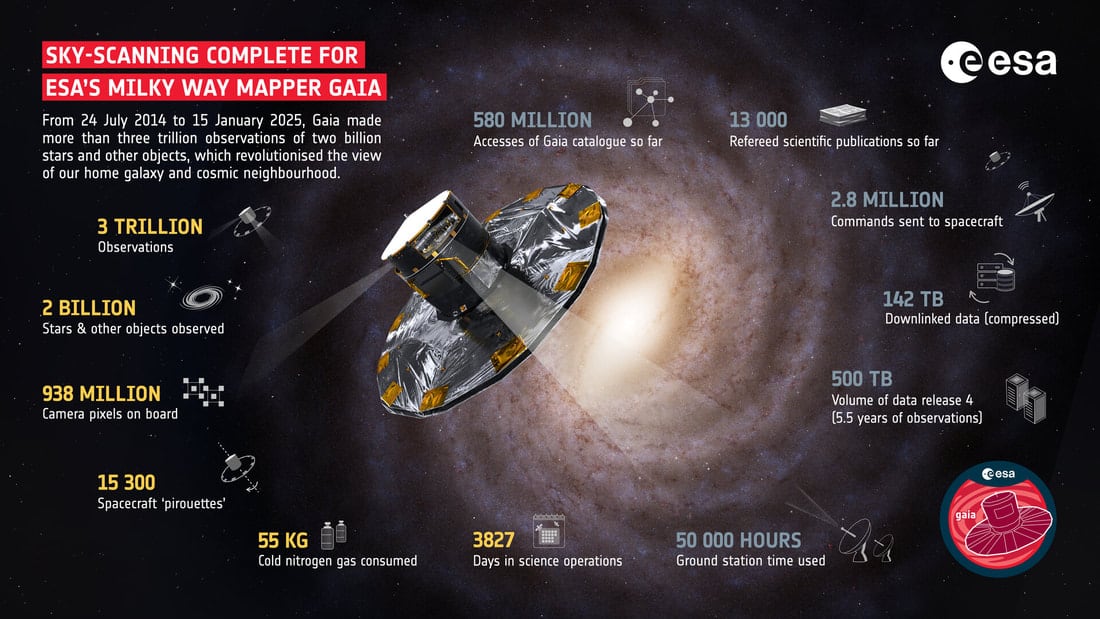
ESA infographic celebrating the end of Gaia sky scanning, showing the spacecraft in front of the Milky Way with key mission statistics

The end of an era

Gaia ended its sky-scanning observations in January 2025 after more than a decade, leaving a transformative archive that will shape astronomy for years.

Read article

Partners and funding

Supported by the Agence Nationale de la Recherche (ANR, project MOTS), the European Union's Horizon Europe programme (project ACME), the Labex P2IO and the Programme National Hautes Énergies (PNHE).